Posts

Showing posts with the label auger

Digga Tips - Which Auger to Choose for What Ground Conditions

Image
When drilling in different ground conditions you need the right speed and the right cutting system on the auger to suit the different ground conditions. So which auger should you choose for your application?For efficient drilling on any machine requires power (torque) and down pressure. Digga augers perform better at an optimal RPM against the ground conditions they are against. Similarly the auger diameter will perform better at certain speeds. For example: the larger the hole and harder the ground conditions, the slower you will need to drill. The smaller the hole and softer the ground conditions, then more speed is required.  As a general rule we recommend the following RPM/speeds: 55-65 RPM for general earth conditions. 45-55 RPM when drilling in heavy earth, clay or shale.  20-45 RPM when drilling in rock. Results will depend on rock hardness, type of auger being used and machine down force.  Digga recommends the following for attachments for the different ground c...

How to Replace Bladed Auger Teeth (A-series Augers)

Image
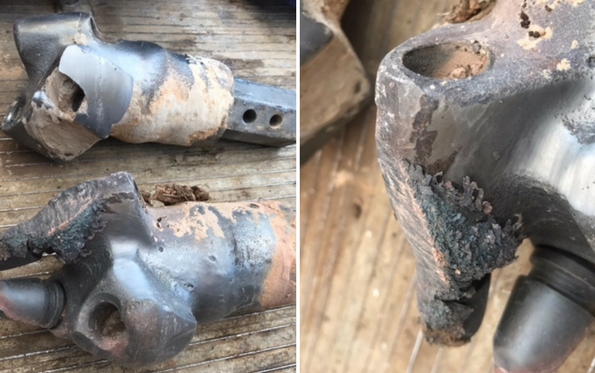
If your A-series auger teeth look anything like the below you should replace them rather sooner than later. The tungsten tip A-Series Auger tooth will wear most on the leading edge of the tungsten. You should see a valley type pattern on the underside of the teeth. In the following, you will find a guide on how remove and install worn auger teeth for A-series augers. If you need to install tapered teeth or rotating rock picks check out our blog. In the meantime, you can also watch our video .  Removing Bladed Auger Teeth Bladed teeth are found on all A series earth augers. Follow these first steps to remove them. 1. If a nylon pin (Pinloc) is in place, remove it using a hole puncher or by breaking the pin. Pinloc is available on A4 augers only. 2. Place a punch in the groove on the back of the tooth, Tap on the back of the punch with a hammer to dislodge the tooth. This should also release the Rubberloc, if used. 3. If the tooth is jammed or difficult to remove, a pin punch or ce...

Digga tips: drilling in clay

Image
When you’re drilling in clay it can be difficult to remove the spoil off of the auger. It’s tempting to alternate the drive from forward to reverse to flick the clay off, but this can cause serious torque related stress on the drive gearbox which will lead to premature failure and subsequently expensive repairs. Hitting the auger against the ground can also create side load on the shaft which could in turn damage the shaft seal and gear box. In our previous blog post we explain the best way to remove spoil from your auger; using a forward, stop, forward, stop control pattern. This can often take a long time when working in clay and time costs money… Here are a number of tips to help remove the spoil from your auger when drilling in clay: Drilling another hole with the clogged auger and then reversing out of the hole will remove soil from the flights Using a single carry flight auger to avoid the clay becoming compacted between the flights Choose a steep pitched auger flig...

The Digga ECV and pile kick back when installing screw piles.

Image
Screw piles or helical piles are installed to an engineered torque specification. By the time installation torque is reached and the operator stops the machine, the screw pile has built up rotational energy - similar to a rubber band on a wind up model aeroplane. This energy that is stored in the anchor needs to be released before the drive unit is disconnected. The ECV bypasses the stored energy allowing the anchor to “unwind” in a controlled manner. Without this valve, the pressure contained when holding the pile in place would be forced up the pile and into the drive unit resulting in potential damage & costly repairs for the motor and gearbox. See the diagram below, the red arrow demonstrates the force of the energy up the screw pile. Digga's flow reversal bypass valve (Energy Control Valve - ECV) is fitted as standard to Digga Screw Anchor Drives and can be retro fitted to drilling drives as required. The Digga ECV effectively protects the motor in your dr...

Over 30 years of Digga attachments - Ron’s Landscaping

Image
Machinery and earthworks-enthusiast Ron Bates from Ron’s Landscaping tells us he’s been involved in the industry over 30 years. Being a very brand-loyal Aussie bloke, Ron swears by two brands he has stuck with over the years - Bobcat for Skid Steer Loaders and Digga for machinery attachments. “The reason I chose Digga was because I couldn’t justify the price of the other attachments on the market compared to the quality. And seen my Digga attachments are still running today, it was well worth it! I started off with a PD3 and an auger to fit my machine 30 years ago. Not long after purchasing another few augers, I bought a trencher and a slasher – which are now over 20 years old too.” Being involved in the industry for so long, he sure has some great experience and likes to get the most out of his attachments. “I do all types of machine-work now, from digging dams to clearing, rural fencing, trenching for farmers, plumbers, electricians – basically anyone who needs some help diggi...

Digga tips - when to rotate picks and change the teeth in your rock auger.

Image
You will at some point need to replace your auger teeth , when is dependent on how often they are used, how they are looked after and the ground conditions they are being used. However, the teeth on your auger should be changed as soon as reasonable wear is noticed and before any pocket wear occurs. The productivity of the auger will decrease as the efficiency of the teeth wears. The outside teeth are travelling the greatest distance as they follow the rotation of the circumference of the augers diameter so they will wear out much quicker than those towards the centre. This is because they have not been travelling as greater distance. The most common sign of wear is to the outer tips of the tooth and this wear will follow the radius of the diameter. If you continue to wear through your outer teeth, you will begin to wear into the pockets and the flights of the auger. It is important to check your teeth regularly to work productively and efficiently. If you find yourself in a r...

Digga tips - the importance of vertical alignment when drilling.

Image
Having trouble drilling? The correct vertical alignment of your auger into the ground is essential to ensure efficient & effective drilling with your excavator. The natural arc movement of the boom causes the dipper arm to move out of alignment as it is raised or lowered, which is why constant operator adjustments are required to maintain vertical alignment. Please consider, that failure to do so will create significant side load on the auger drive and auger! As Digga auger drives are pendulum drills designed to hang freely from the excavator mount - excessive side load may result in bent auger flights, pipe and hubs as well as potential damage to the auger drive shaft, seals and gearbox. When you are drilling especially into hard ground this may also  cause socket and pilot breakage. So make sure to align your auger and drive correctly, to avoid damager and drill which much better performance. You can find more info and tips for drilling in harder grounds such as rock or...

Digga tips - servicing and changing the oil of your Digga drive unit.

Image
It is important to service your Digga drive unit and change the oil regularly as per the owners manual. This will ensure longevity and performance of your drive. The oil in your drive unit is independent to your hydraulic system. Oil from your machine does not lubricate your drive unit. As a result your auger drive requires regular oil changes to remain in perfect working condition. The images below illustrate the importance of regular servicing of your auger drive in accordance with the owners manual. The 3 drive units were tested in our Hydraulic Cyclic Testing Unit where 10 years of wear and tear was simulated. Oil was changed in the drives at different intervals illustrating the wear caused by neglect. Changing the oil and a regular service of your Digga drive unit is crucial to its longevity and performance. For more information on the Digga Service offering visit  www.digga.com/service-spares

Why choose a 2-speed drive over a single speed drive?

Image
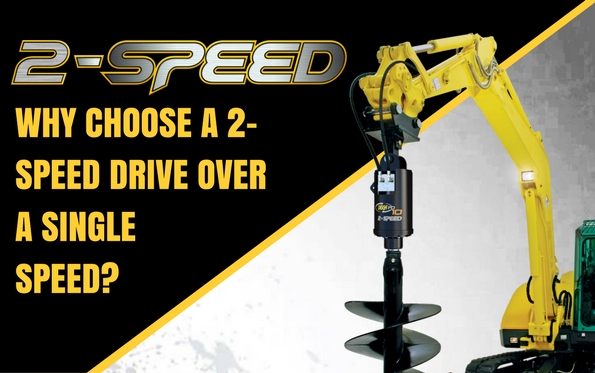
If you’re working with multiple sized augers or often in different ground conditions you’ll understand the expense and time wasted that comes with needing multiple drive units for the different applications. When the ground is soft you want a higher speed to get the hole drilled quickly and then move onto the next one. When the ground is hard or you’re using a large auger you need torque to get the job done efficiently. Speed and torque are always a trade-off; when you increase your speed you lose power and when you increase your power, you lose speed. Similar to a manual car, fourth gear allows speed but struggles with the power required to get the vehicle up the hill Standard, single speed drives are typically manufactured as a cost effective solution to provide a speed and torque to suit most applications but will give you one or the other. 2 speed auger drives have grown in popularity over the last few years and, as leading manufacturers, we can understand why. We unde...

Digga DR range of augers

Image
Digga's dedicated rock augers (DR) require constant maintenance to remain effective. The teeth must be free to rotate inside the pocket. Teeth that stop rotating will be inefficient and wear out faster causing damage to the tooth pockets and flights. In the video below, Queensland Sales Manager Anthony Wieckmann talks to you in detail about our dedicated rock augers – the tool you need if you’re drilling into hard fracturable grounds. Tips when drilling in rock When drilling in rock for extended periods of time air is trapped in the hole creating an “oven”. This can cause the face of the rock to glaze over and become even harder. For this reason, you should stop drilling and allow fresh air back in the hole approximately every 5 minutes. As you stop drilling, bring the auger to the surface and allow fresh air back down the hole. Remove any spoil from the auger and inspect the teeth and pilot for wear and that they can turn freely in their pocket. For more informat...

Custom builds to meet customer requirements

Image
Hypower Hydraulics are a Digga reseller from New South Wales. They specialise in hydraulics, but they often have a customer requirement for drilling and screw anchor drives with high power and high torque – although never the ‘standard’ requirements. Manual Geldes, the business owner, explained that his customers often call up for the “weird and wonderful” and it is his long-standing relationship with Digga Australia and his trust in our manufacture that allows him to meet their requirements. Hypower Hydraulics request custom drives for different ground conditions or specific screw anchoring applications. They most recently called upon Digga when they needed a drive with a specific gear ratio that would allow their customer to achieve the desired speed and torque output to complete a job. In this instance, they opted for a custom drive which features a custom gearset configuration tested to achieve the specification. In the past, they have relied on the team at Digga for varia...

The Digga auger range

Image
The right auger for the right ground condition is key to working productively. Here we have a brief overview of the 3 different 'standard' auger ranges Digga manufacture. 'A' or 'earth' range of augers Digga's A augers are efficient in cutting through earth, clay and soft ground as it uses flat teeth to peel up the layers. Our A augers have 3 teeth options within the range to aid wear; the standard earth tooth, flat carbide tooth or raised carbide tooth option.  'RC' or 'rock combo' augers Digga's RC range of augers uses a tapered tooth which can be used on rocky/ earthy grounds. The tungsten tipped teeth helps to rip into the ground.  'DR' or 'rock' augers Dedicated rock augers are ideal for bursting into material such as shale or rock. They use a pick tooth to break and fracture into the ground.  Watch our video of Anthony giving a brief overview of the range here:  ...

Get your fencing in line.

Image
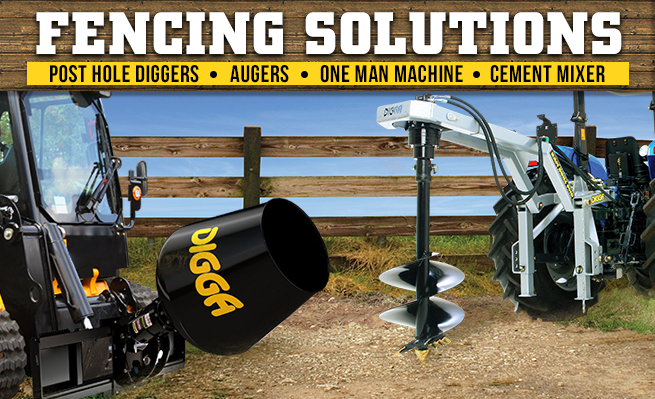
From one-man post hole diggers , augers and cement mixers suitable for tractors, telehandlers and skid steer loaders; take advantage of Digga's range of fencing solutions before the start of the season. Whether your fences are containing livestock, subdividing your land or keeping your neighbours out, Digga fencing attachments will take the hard work out of installing strong, stable fence post holes. LEARN MORE

Drilling expert uses Digga 2-speed auger drives.

Adrian Eagan, aka Baldy has been drilling in one form or another all his working life. Working for one of Queensland largest earthmovers L&D Earthmoving , we wanted to hear what he makes of the Digga drives he puts to work every day.   L&D Earthmoving were established in 1954 and Baldy has been with them for the last 25 years explaining that the company service a mix of commercial and domestic customers “from backyard bobs to major infrastructures – there is virtually no where we can’t service!” Covering all of South East Queensland working in light dusty sands and clay to solid blue metal Baldy really puts his drives through their paces. “I run a few 4.5 or 6 tonne combos for all our everyday work and light duty drilling with the Digga PD3. Then I operate an 18 tonne excavator with a 2 speed Digga PD30.” The Digga PD30 is an upgrade from the PD18 Baldy used to operate but he admits “after 8 years of heavy work, I finally managed to break the PD18…”  Of ...

Helical piling experts give Digga's Australian Manufacturing a tick in the box

Image
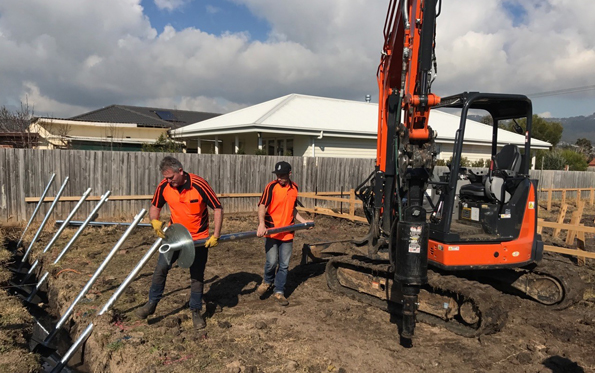
Coming from a background of Australian small business, helical piling experts Brodie and Rob Houghton believe that supporting Australian manufacturing, skills and ingenuity should be top of the list when selecting new machinery attachments. Brodie and Rob Houghton have over 25 years of experience in small business development, servicing specialist engineering and construction industry niches, including extensive experience in the Residential, Civil and Commercial Construction disciplines. Brodie and Rob are now the Directors of Solidity Pty Ltd , specialists in Helical Pile manufacture and installation. Solidity service the entire state of Victoria, with emphasis on areas with swampy or sandy foundations, where helical piling provides significant economic and structural benefits over the concrete bored pile equivalent. The Solidity team operate using a number of different machinery platforms, and have recently purchased a new 5.5T excavator. Each of their excavators is matched ...

Foundation Technologies make a commitment to Digga auger drives and their machinery attachments.

Image
Steve Hassett, Foundation Technologies Australia business owner and co-founder used his first Digga auger drive unit in January 2017 and since then he’s never looked back; making a commitment to Digga and their Australian manufacturing. Starting off with just one machine in 2012, Foundation Technologies now have six machines ranging from 1.7 – 13 tonne excavators, specialising in residential screw piling. For the last five years Steve has been using alternative machinery attachment brands but following his success with his first Digga purchase earlier this year he has decided to change all of his auger drives over to Digga Machinery Attachments . Steve has been extremely impressed with the technology the Digga auger drives offer, particularly the 2 speed units (which he now owns 2 of) and he says it’s something that the rest of the market doesn’t offer, “our Digga PD12 on the 3.5T Yanmar gives us up to 9000nm of output torque with the opportunity to help out our cl...

Summit Landscapes of NSW tell us why they choose Digga Machinery Attachments.

Image
Offering practical solutions for our customers is imperative for Digga and our range of machinery attachments. Proving just that is Mitch Wetton from Summit Landscapes. The local family owned and operated business working in the Smeaton Grange and Narellan areas of NSW specialise in construction landscaping, concreting and all excavation/ bulk earthworks. In the last 15 years Mitch has grown to love Digga Machinery Attachments . He had been using a range of Digga attachments through rental companies for several years but felt it was important to invest in his own attachments following successes servicing both small and large builders on a residential and commercial scale. Mitch purchased his first Digga attachment almost 10 years ago and hasn’t looked back since, with his range of Digga attachments growing annually! He regularly uses his Digga Auger Drive units with rock combo and dedicated rock augers to drill holes for structural piers in concrete and post holes for ret...

‘Unbreakable’ screw anchor drives the foundation of successful screw pier contractor.

Image
A man who spent years trying to break Digga screw anchor drive units now says he can’t run his business without them. Geoff Taunton runs Gold Coast Screw Piers , a Queensland-based deep foundation system provider servicing more than 200 clients from Coffs Harbour to Cairns. Explaining the history of his business, Geoff told us: "Back when Digga was still in the R&D phase they would give me a new test auger drive unit and tell me to go and break it. Installing screw piers and bored piers involves putting extreme vertical force on the piece of machinery attachment. It’s extremely harsh on the equipment, so it was really an ideal testing ground for the drive units. I would break the drive and tell Digga exactly what I was doing and what pressure it was under when it broke. They would use that information to improve the design, then give me a new one to break and the process would start again. These days it’s pretty hard to break a Digga screw anchor drive. For such a sev...

New excavator cradle hitch for Digga augers.

Image
Digga's new excavator cradle hitch has been designed to make safe manoeuvring around work sites even easier and provide a simpler connection to Digga augers and screw piles. The double pin hitch with drive unit cradle makes it ideal for use in all ground conditions giving you better control when moving from hole to hole. Available with loose pin or fixed pin options. Suitable for use with PD3-PD50 drive models. For more information visit www.digga.com 

Digga provide machinery attachments and service that makes customers lives easier.

Image
We know that our customers are busy working long hours in often remote locations so our focus at Digga is to work closely with them to understand their needs and requirements, ensuring we supply a high quality range of machinery attachments with the best sales and service possible, going over and above. For one customer in particular, Phil Shovlin of Shovlin Plant Hire Australia time is always of the essence so when he takes time out to write an email to our head office thanking staff for their exceptional service, we know he means business! Offering specialist plant hire to the railway, mining and construction industries across the east coast of Australia, Shovlin Plant Hire recently purchased a 900mm Digga Rock Auger to fit to their 128 Komatsu Excavator for drilling work on the Roma Street railway. Phil told us “The rock augers and core barrel drills worked a treat,” and as a result of their success at Roma Street have bagged further work from their international clie...