Posts

Showing posts with the label torque anchor

The evolution of screw piling.
Image
It is said that the first recorded use of a screw pile was by Alexander Mitchell, a brick maker and engineer from Ireland who coined the term ‘screw-pile’ in 1833. Initially the concept of screw piling was used to provide solid foundations for lighthouses in soft soil and provided enough holding power to safely moor ships in the harbour. The original screw pile concept cannot be officially confirmed but in the April 1848 issue of the Civil Engineer and Architects Journal the article highlights the mechanics of the bearing power of screw moorings and screw piles which Alexander Mitchell is argued to have introduced:  "The origin of the screw-pile was the screw mooring, which was designed for the purpose of obtaining, for an especial purpose, a greater holding power than was possessed by either the ordinary pile or any of the usual mooring -anchor blocks, of however large dimensions.... whether this broad spiral flange, [or ’ground screw,’ as it may be termed] were fixed...

Screw piles and screw piling.

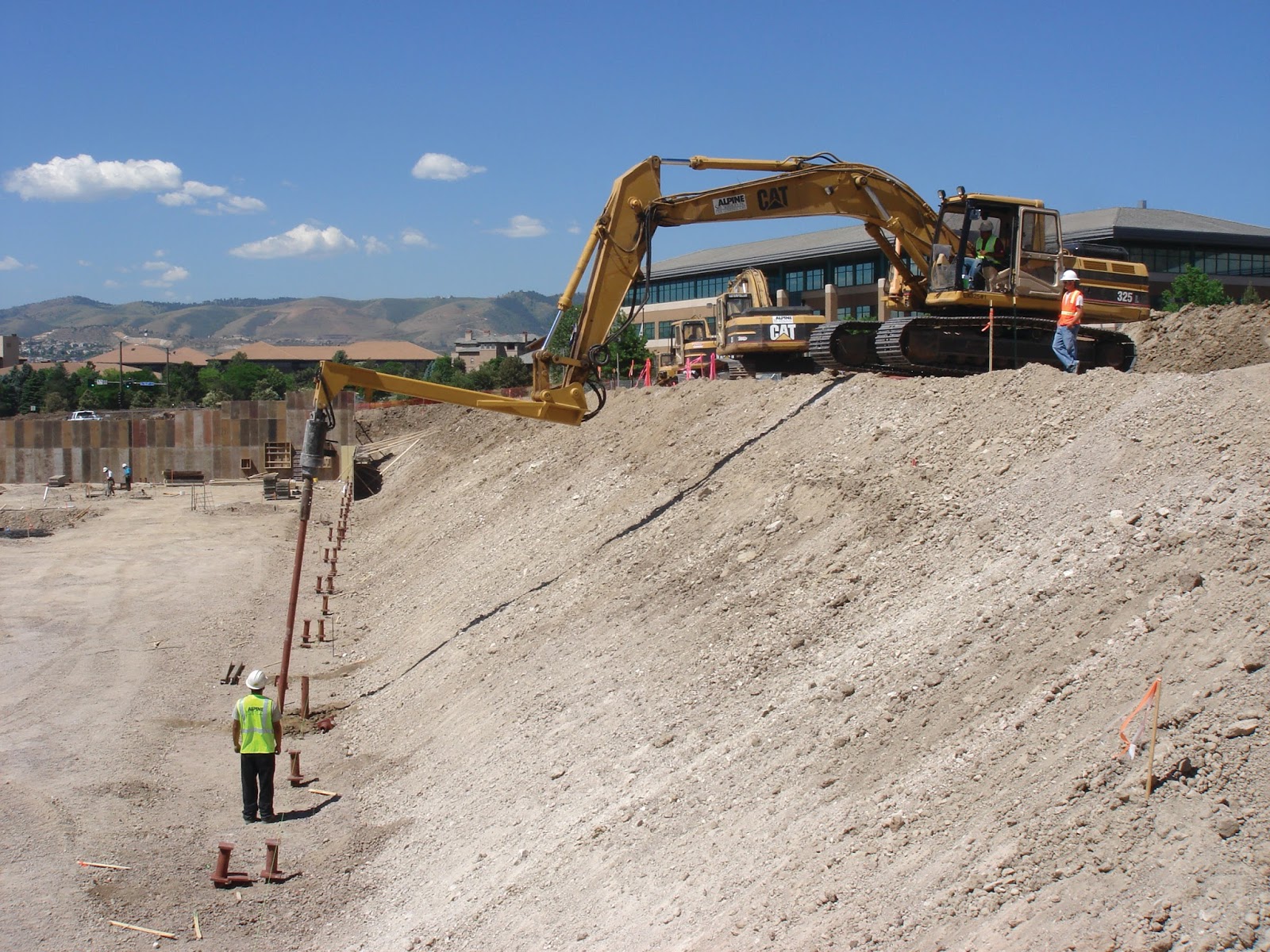
What is a screw pile? A screw pile is also known as a helical pile, helical anchor, helix pier, screw anchor, helical pier, torque pile and/ or torque anchor. What is screw piling?  In unstable grounds when a traditional cast-in-place foundation system is not possible, screw piling offers a foundation support system for an ever increasing number of applications. Screw piling is the application of a screw pile into the ground. A screw pile is a factory manufactured steel foundation system consisting of a central rod with one or more helix shaped blade plates and a bracket at the end that allows attachment to a structure. The tip is cut on an angle to allow it to penetrate the ground as a pilot. The pile has 'flights' which are flat in pitch to help the pile pull itself into the ground with minimum downforce applied. With the use of an excavator and a hydraulic screw anchor drive motor attached, the screw pile is screwed into the ground to the desired compression torque...