Posts

Showing posts with the label screw anchor drives

The Digga ECV and pile kick back when installing screw piles.

Image
Screw piles or helical piles are installed to an engineered torque specification. By the time installation torque is reached and the operator stops the machine, the screw pile has built up rotational energy - similar to a rubber band on a wind up model aeroplane. This energy that is stored in the anchor needs to be released before the drive unit is disconnected. The ECV bypasses the stored energy allowing the anchor to “unwind” in a controlled manner. Without this valve, the pressure contained when holding the pile in place would be forced up the pile and into the drive unit resulting in potential damage & costly repairs for the motor and gearbox. See the diagram below, the red arrow demonstrates the force of the energy up the screw pile. Digga's flow reversal bypass valve (Energy Control Valve - ECV) is fitted as standard to Digga Screw Anchor Drives and can be retro fitted to drilling drives as required. The Digga ECV effectively protects the motor in your dr...

Digga drive key features (up to PD50)

Image
Digga’s range of screw anchor and auger drives are the ultimate in performance, quality and cost effectiveness. With over 30 years of design and development, working in the field and listening to the needs of our customers to exceed their expectations. All Digga drive units are manufactured in Australia, by Digga - from the hood on the drive to the gear box and Eaton motor. Our drives feature key design modifications to stand them apart from the competition: Integrated motor and output housing unit Our custom designed hydraulic motors were developed in conjunction with Eaton, using Eaton Geroler technology. Not satisfied with an off-the-shelf motor we developed the design specifically for the earth moving industry; significantly reducing the weight and overall length of the drive unit by integrating the hydraulic motor into the actual housing. Merging the motor with the input housing creates a direct connection to the gearset and eliminates the need for several gearbo...

The evolution of screw piling.

Image
It is said that the first recorded use of a screw pile was by Alexander Mitchell, a brick maker and engineer from Ireland who coined the term ‘screw-pile’ in 1833. Initially the concept of screw piling was used to provide solid foundations for lighthouses in soft soil and provided enough holding power to safely moor ships in the harbour. The original screw pile concept cannot be officially confirmed but in the April 1848 issue of the Civil Engineer and Architects Journal the article highlights the mechanics of the bearing power of screw moorings and screw piles which Alexander Mitchell is argued to have introduced:  "The origin of the screw-pile was the screw mooring, which was designed for the purpose of obtaining, for an especial purpose, a greater holding power than was possessed by either the ordinary pile or any of the usual mooring -anchor blocks, of however large dimensions.... whether this broad spiral flange, [or ’ground screw,’ as it may be termed] were fixed...

Digga tips - servicing and changing the oil of your Digga drive unit.

Image
It is important to service your Digga drive unit and change the oil regularly as per the owners manual. This will ensure longevity and performance of your drive. The oil in your drive unit is independent to your hydraulic system. Oil from your machine does not lubricate your drive unit. As a result your auger drive requires regular oil changes to remain in perfect working condition. The images below illustrate the importance of regular servicing of your auger drive in accordance with the owners manual. The 3 drive units were tested in our Hydraulic Cyclic Testing Unit where 10 years of wear and tear was simulated. Oil was changed in the drives at different intervals illustrating the wear caused by neglect. Changing the oil and a regular service of your Digga drive unit is crucial to its longevity and performance. For more information on the Digga Service offering visit  www.digga.com/service-spares

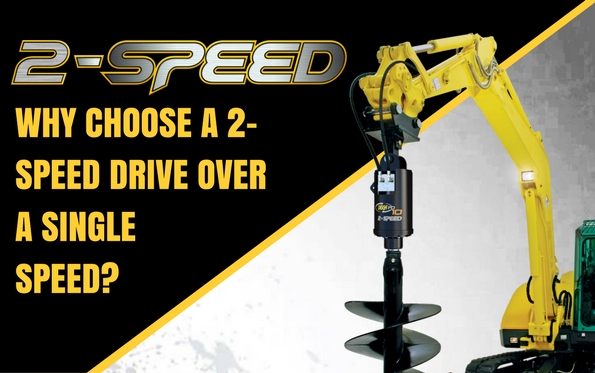
Why choose a 2-speed drive over a single speed drive?

Image
If you’re working with multiple sized augers or often in different ground conditions you’ll understand the expense and time wasted that comes with needing multiple drive units for the different applications. When the ground is soft you want a higher speed to get the hole drilled quickly and then move onto the next one. When the ground is hard or you’re using a large auger you need torque to get the job done efficiently. Speed and torque are always a trade-off; when you increase your speed you lose power and when you increase your power, you lose speed. Similar to a manual car, fourth gear allows speed but struggles with the power required to get the vehicle up the hill Standard, single speed drives are typically manufactured as a cost effective solution to provide a speed and torque to suit most applications but will give you one or the other. 2 speed auger drives have grown in popularity over the last few years and, as leading manufacturers, we can understand why. We unde...

Helical piling experts give Digga's Australian Manufacturing a tick in the box

Image
Coming from a background of Australian small business, helical piling experts Brodie and Rob Houghton believe that supporting Australian manufacturing, skills and ingenuity should be top of the list when selecting new machinery attachments. Brodie and Rob Houghton have over 25 years of experience in small business development, servicing specialist engineering and construction industry niches, including extensive experience in the Residential, Civil and Commercial Construction disciplines. Brodie and Rob are now the Directors of Solidity Pty Ltd , specialists in Helical Pile manufacture and installation. Solidity service the entire state of Victoria, with emphasis on areas with swampy or sandy foundations, where helical piling provides significant economic and structural benefits over the concrete bored pile equivalent. The Solidity team operate using a number of different machinery platforms, and have recently purchased a new 5.5T excavator. Each of their excavators is matched ...

Foundation Technologies make a commitment to Digga auger drives and their machinery attachments.

Image
Steve Hassett, Foundation Technologies Australia business owner and co-founder used his first Digga auger drive unit in January 2017 and since then he’s never looked back; making a commitment to Digga and their Australian manufacturing. Starting off with just one machine in 2012, Foundation Technologies now have six machines ranging from 1.7 – 13 tonne excavators, specialising in residential screw piling. For the last five years Steve has been using alternative machinery attachment brands but following his success with his first Digga purchase earlier this year he has decided to change all of his auger drives over to Digga Machinery Attachments . Steve has been extremely impressed with the technology the Digga auger drives offer, particularly the 2 speed units (which he now owns 2 of) and he says it’s something that the rest of the market doesn’t offer, “our Digga PD12 on the 3.5T Yanmar gives us up to 9000nm of output torque with the opportunity to help out our cl...

‘Unbreakable’ screw anchor drives the foundation of successful screw pier contractor.

Image
A man who spent years trying to break Digga screw anchor drive units now says he can’t run his business without them. Geoff Taunton runs Gold Coast Screw Piers , a Queensland-based deep foundation system provider servicing more than 200 clients from Coffs Harbour to Cairns. Explaining the history of his business, Geoff told us: "Back when Digga was still in the R&D phase they would give me a new test auger drive unit and tell me to go and break it. Installing screw piers and bored piers involves putting extreme vertical force on the piece of machinery attachment. It’s extremely harsh on the equipment, so it was really an ideal testing ground for the drive units. I would break the drive and tell Digga exactly what I was doing and what pressure it was under when it broke. They would use that information to improve the design, then give me a new one to break and the process would start again. These days it’s pretty hard to break a Digga screw anchor drive. For such a sev...

Screw piles and screw piling.

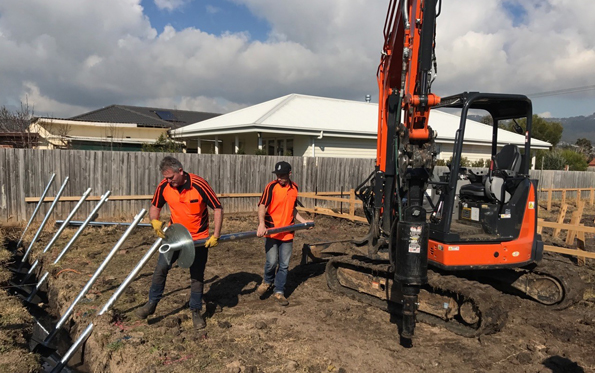
What is a screw pile? A screw pile is also known as a helical pile, helical anchor, helix pier, screw anchor, helical pier, torque pile and/ or torque anchor. What is screw piling?  In unstable grounds when a traditional cast-in-place foundation system is not possible, screw piling offers a foundation support system for an ever increasing number of applications. Screw piling is the application of a screw pile into the ground. A screw pile is a factory manufactured steel foundation system consisting of a central rod with one or more helix shaped blade plates and a bracket at the end that allows attachment to a structure. The tip is cut on an angle to allow it to penetrate the ground as a pilot. The pile has 'flights' which are flat in pitch to help the pile pull itself into the ground with minimum downforce applied. With the use of an excavator and a hydraulic screw anchor drive motor attached, the screw pile is screwed into the ground to the desired compression torque...

Digga provide machinery attachments and service that makes customers lives easier.

Image
We know that our customers are busy working long hours in often remote locations so our focus at Digga is to work closely with them to understand their needs and requirements, ensuring we supply a high quality range of machinery attachments with the best sales and service possible, going over and above. For one customer in particular, Phil Shovlin of Shovlin Plant Hire Australia time is always of the essence so when he takes time out to write an email to our head office thanking staff for their exceptional service, we know he means business! Offering specialist plant hire to the railway, mining and construction industries across the east coast of Australia, Shovlin Plant Hire recently purchased a 900mm Digga Rock Auger to fit to their 128 Komatsu Excavator for drilling work on the Roma Street railway. Phil told us “The rock augers and core barrel drills worked a treat,” and as a result of their success at Roma Street have bagged further work from their international clie...

Digga tips - best practice to increase the life of your wearparts.

Image
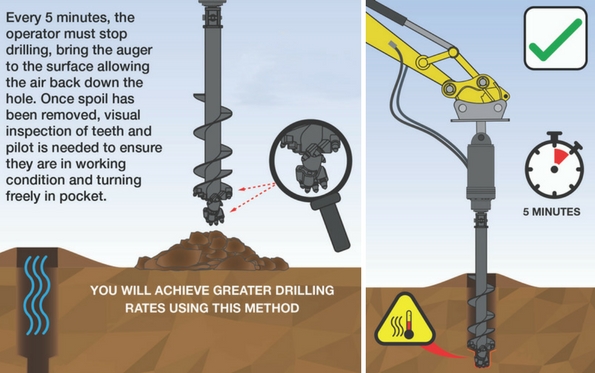
The cutting teeth & pilot on any auger are wear parts and you can increase the life of them with the help of Digga's best practice tips. The wear life of a tooth or pilot is undefinable. They will be affected by how often they are used, how they are looked after and the ground conditions they are being used in. For example, in non-fracturable ground where the rock is reduced to a powder; the powder is likely to get caught in and around the cutting head and, acting like a sand paper, will wear away both the pocket and the tooth. In hard ground conditions such as rock over heating within the hole can cause the ground to glaze over. The heat will polish the rock making it harder and have a greater influence on the wear of your cutting heads. To assist with peak performance and longevity of the wear parts there are a few procedures that can be carried out that will help prolong the life of wear parts and increase drilling efficiency. To help increase the life of your wear...

Digga review the advantages of screw piling.

Image
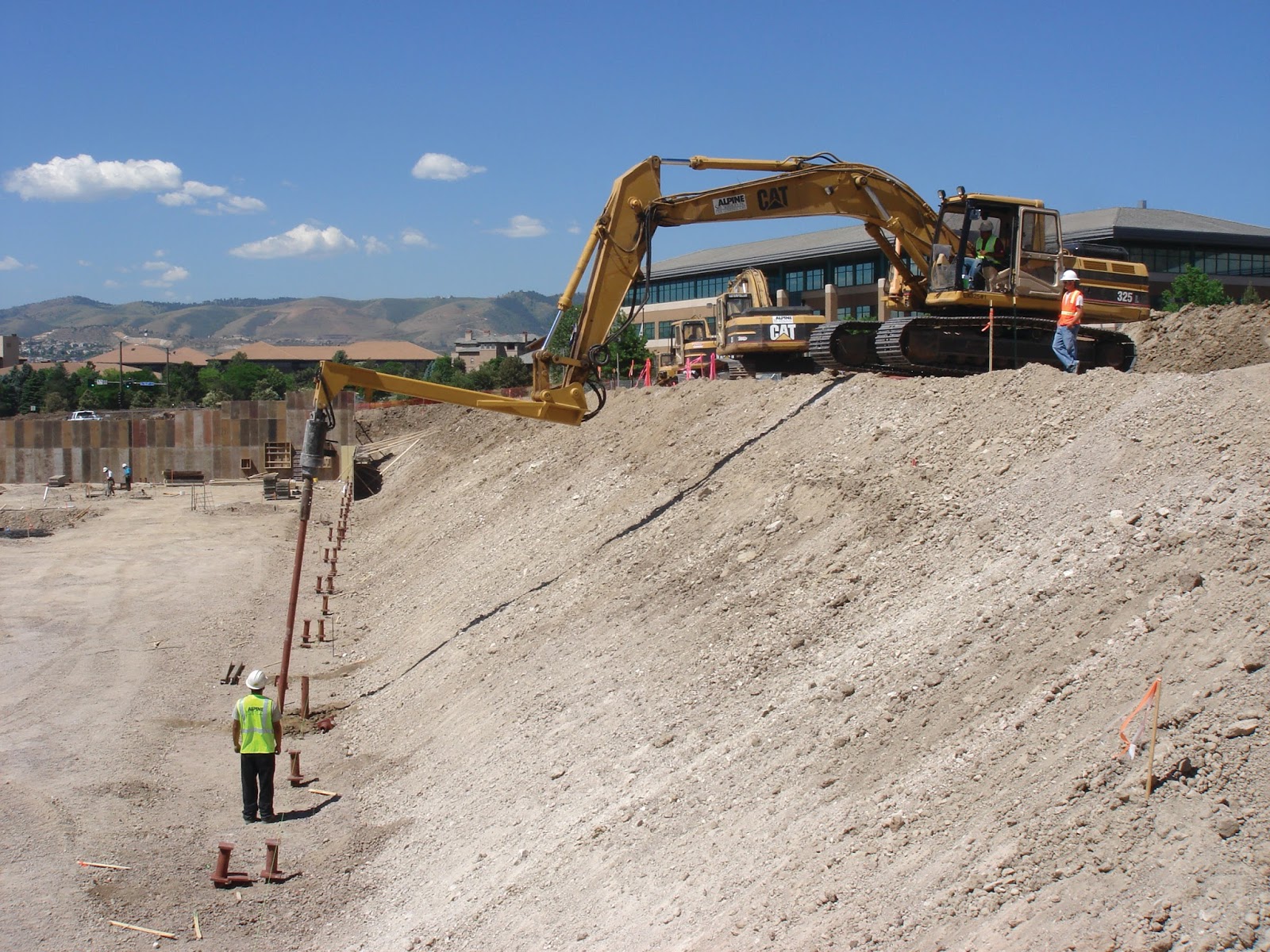
Screw piling comes with a range of advantages and their application continues to grow as we continue to build and develop marginal sites; from the instant foundations of manufactured homes and pre-engineered metal buildings to axial compression and lateral tension load supports. There are a number of benefits to screw piling over traditional methods and we often here industry experts saying helical piling is more efficient and better for the environment. Here we dig a little bit deeper to look at some of the pros to screw piling. Screw piling is quick to install - providing the job brief has clearly defined the parameters effectively, screw piling can be completed efficiently. There is no requirement for cement, waiting on setting times or digging out the ground, so you can move straight onto the next one without having to hang about. Measuring and recording - one of the most important features of screw piling is the ability to verify the load capacity during the installation ...