Posts

Showing posts with the label screw anchor

The Digga ECV and pile kick back when installing screw piles.

Image
Screw piles or helical piles are installed to an engineered torque specification. By the time installation torque is reached and the operator stops the machine, the screw pile has built up rotational energy - similar to a rubber band on a wind up model aeroplane. This energy that is stored in the anchor needs to be released before the drive unit is disconnected. The ECV bypasses the stored energy allowing the anchor to “unwind” in a controlled manner. Without this valve, the pressure contained when holding the pile in place would be forced up the pile and into the drive unit resulting in potential damage & costly repairs for the motor and gearbox. See the diagram below, the red arrow demonstrates the force of the energy up the screw pile. Digga's flow reversal bypass valve (Energy Control Valve - ECV) is fitted as standard to Digga Screw Anchor Drives and can be retro fitted to drilling drives as required. The Digga ECV effectively protects the motor in your dr...
The evolution of screw piling.

Image
It is said that the first recorded use of a screw pile was by Alexander Mitchell, a brick maker and engineer from Ireland who coined the term ‘screw-pile’ in 1833. Initially the concept of screw piling was used to provide solid foundations for lighthouses in soft soil and provided enough holding power to safely moor ships in the harbour. The original screw pile concept cannot be officially confirmed but in the April 1848 issue of the Civil Engineer and Architects Journal the article highlights the mechanics of the bearing power of screw moorings and screw piles which Alexander Mitchell is argued to have introduced:  "The origin of the screw-pile was the screw mooring, which was designed for the purpose of obtaining, for an especial purpose, a greater holding power than was possessed by either the ordinary pile or any of the usual mooring -anchor blocks, of however large dimensions.... whether this broad spiral flange, [or ’ground screw,’ as it may be termed] were fixed...

Digga tips - servicing and changing the oil of your Digga drive unit.

Image
It is important to service your Digga drive unit and change the oil regularly as per the owners manual. This will ensure longevity and performance of your drive. The oil in your drive unit is independent to your hydraulic system. Oil from your machine does not lubricate your drive unit. As a result your auger drive requires regular oil changes to remain in perfect working condition. The images below illustrate the importance of regular servicing of your auger drive in accordance with the owners manual. The 3 drive units were tested in our Hydraulic Cyclic Testing Unit where 10 years of wear and tear was simulated. Oil was changed in the drives at different intervals illustrating the wear caused by neglect. Changing the oil and a regular service of your Digga drive unit is crucial to its longevity and performance. For more information on the Digga Service offering visit  www.digga.com/service-spares

Maintenance for you Digga drive unit

Digga drilling drives. Digga's range of premium drilling auger drives are the ultimate is performance, quality and cost effectiveness.  Ideally suited to drilling and auguring applications in most ground conditions, the Digga drive range is completely manufactured and assembled by Digga in Yatala, Queensland. Maintenance for your Digga drive unit. In this video, Mark talks you through the maintenance checks you can make to your Digga drive unit. Before each use you should check the following: Make sure all nuts and bolts are in place and secured tightly Make sure all other fasteners are in place and secured  Check all hydraulic connections are tight and that there are no leaks  Ensure all your safety signs are in place and visible  Check externally for oil leaks  Check the pins, bushes and linkages for wear and tear If you need to make any repairs or maintenance to your drive unit please refer to your user manual for guidance or contact your ...

Level Cut Excavations approve the Digga PD12 drive unit

Image
Level cut excavations Doug Sparkes is the owner of family run business Level Cut Excavations in Hastings, Victoria. His company can do any kind of earth moving or excavation and specialise in screw piles and bored piers. Doug uses the Digga PD12 fitted with a standard double pin hitch connected to his 5.5 tonne Kubota excavator. To install screw piles to a max torque of 11,268Nm Doug had the Digga ECV retrofitted to his drive. Digga ECV Also known as the swoosh valve, the ECV turns a standard auger drive into a screw anchor drive. In doing so, it protects the gearbox and motor in your drive from the rapid decompression of oil and pressure build up after achieving required torque.  By the time installation torque is reached and the operator stops the machine, the screw pile has built up rotational energy - similar to a rubber band on a wind up model aeroplane. This can cause the pile to momentarily 'kick back' and force the energy back up the screw pile through...

The pink Digga screw anchor drive

Image
Tiah Selkrig is 'screwing' the stereotypes of gender roles in construction and proudly advertises her ‘very girly’ pink Digga screw anchor drive and matching pink excavator when on site! Wanting to show construction sites all over the Hunter Valley region that girls can do just as much as boys, Tiah decided she was going to raise the awareness of being a women in construction and painted her Digga drive pink to match the back of her excavator. Tiah works for AAA Down Under offering earth moving, civil construction and foundation services to the Hunter Valley region. AAA Down Under is her Dad’s business and she explained growing up around her father using earth moving machinery inspired her to become an operator just like him. Today she operates her excavator with the Digga MD190 screw anchor drive to install screw piles and said, “I love the Digga drive, it’s the best thing I’ve got!” Tiah decided to custom paint her Digga MD190 screw anchor drive ‘ Breast Cancer Pi...

Screw piles and screw piling.

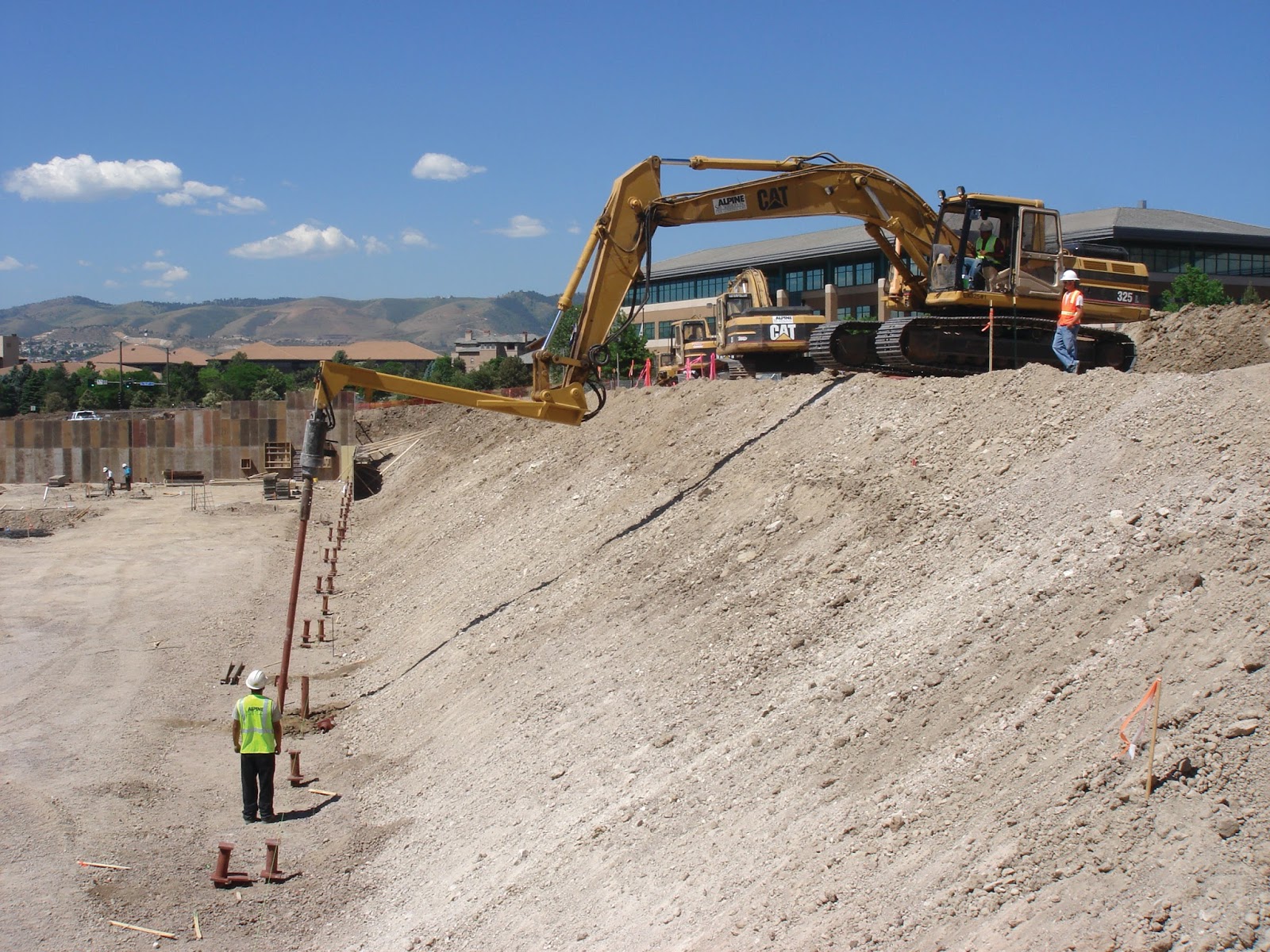
What is a screw pile? A screw pile is also known as a helical pile, helical anchor, helix pier, screw anchor, helical pier, torque pile and/ or torque anchor. What is screw piling?  In unstable grounds when a traditional cast-in-place foundation system is not possible, screw piling offers a foundation support system for an ever increasing number of applications. Screw piling is the application of a screw pile into the ground. A screw pile is a factory manufactured steel foundation system consisting of a central rod with one or more helix shaped blade plates and a bracket at the end that allows attachment to a structure. The tip is cut on an angle to allow it to penetrate the ground as a pilot. The pile has 'flights' which are flat in pitch to help the pile pull itself into the ground with minimum downforce applied. With the use of an excavator and a hydraulic screw anchor drive motor attached, the screw pile is screwed into the ground to the desired compression torque...

Digga review the advantages of screw piling.

Image
Screw piling comes with a range of advantages and their application continues to grow as we continue to build and develop marginal sites; from the instant foundations of manufactured homes and pre-engineered metal buildings to axial compression and lateral tension load supports. There are a number of benefits to screw piling over traditional methods and we often here industry experts saying helical piling is more efficient and better for the environment. Here we dig a little bit deeper to look at some of the pros to screw piling. Screw piling is quick to install - providing the job brief has clearly defined the parameters effectively, screw piling can be completed efficiently. There is no requirement for cement, waiting on setting times or digging out the ground, so you can move straight onto the next one without having to hang about. Measuring and recording - one of the most important features of screw piling is the ability to verify the load capacity during the installation ...